

What Is a Halfway House? A Complete Guide to Costs, Rules & How to Get In
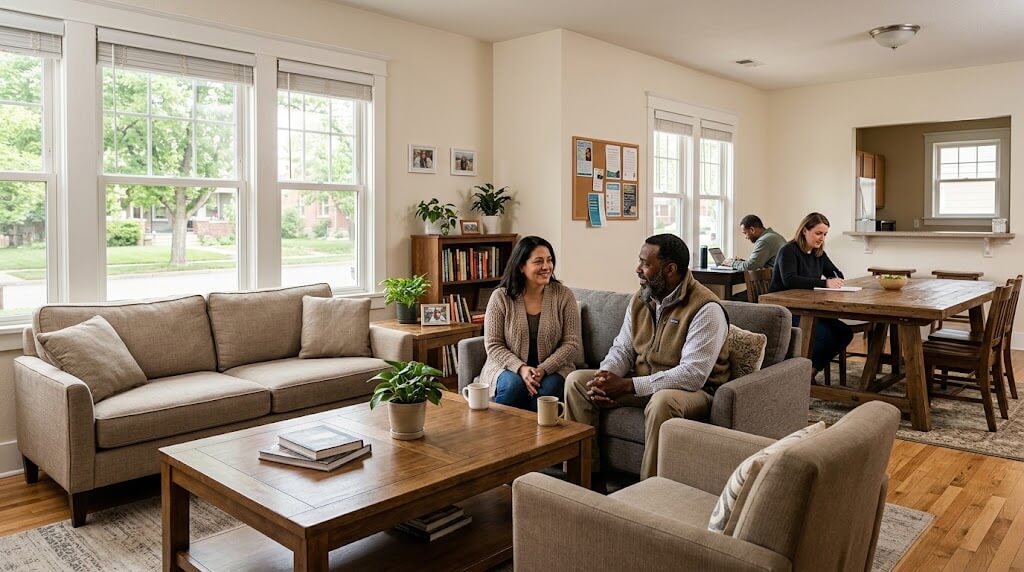
A halfway house is a supervised, substance-free residence that helps people transition from rehab, incarceration, or a crisis situation back into everyday life. It offers structure, accountability, and community during one of the hardest phases of recovery: the return to independence. For many, it becomes the steady ground needed to rebuild routines, relationships, and long-term stability.
Life after treatment or incarceration rarely feels straightforward. Old routines, environments, and relationships can carry real risk, even when the intention to stay sober is strong. A halfway house gives people a safe middle step, one with real support, daily structure, and a community that understands the journey they’re on.
What Is a Halfway House?
A halfway house is a transitional, substance-free residence for people leaving treatment, incarceration, or homelessness. It bridges the gap between a controlled environment and independent living. Residents follow house rules, attend recovery meetings, and often work or job-search during the day. The goal is simple: build stability before returning to full independence. Source: SAMHSA
The term dates back to the 1840s temperance movement, though modern versions look very different. Some are state-funded and tied to the justice system. Others are privately run and focused purely on addiction recovery. Both share the same core purpose: a safe, structured stop between crisis and normal life.
Halfway House vs. Sober Living: What’s the Difference?
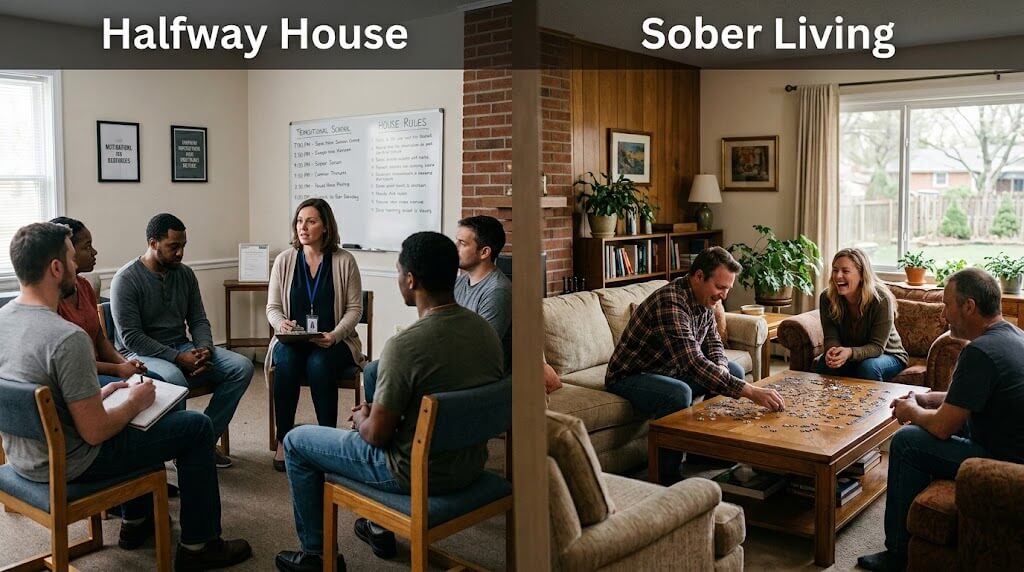
People use these terms interchangeably, but they aren’t identical. This type of transitional housing is often assigned through a court, parole officer, or treatment provider. It’s frequently funded by a state agency or nonprofit. Stays are usually time-limited, often capped around six to twelve months. A sober living home, by contrast, is chosen and paid for by the resident. It has no fixed end date, and residents can stay as long as they follow house rules and remain sober.
| Feature | Court-Assigned Residence | Sober Living |
| Who assigns it | Court, parole, treatment provider | Self-selected |
| Funding | State or nonprofit-funded | Privately paid |
| Length of stay | Usually time-limited | Open-ended |
| Entry point | Often post-incarceration | Often post-rehab, voluntary |
Both environments stay substance-free. Both connect residents to meetings, therapy, and peer support. The real difference comes down to who’s paying, who made the decision, and how long you can stay.
How Is It Different From Rehab?
Rehab means active treatment. It includes detox, therapy, and a structured clinical program. A halfway house isn’t treatment. It’s housing that supports the work already done in rehab. No detox happens here, and no clinical program runs on-site. Instead, residents attend outside counseling or meetings while living in a stable, sober environment. Think of rehab as the intensive phase, and this residence as the practice run for real life.
Who Should Consider a Halfway House?
A halfway house makes sense for several situations:
- Recent rehab graduates who aren’t ready to return to old environments or triggers
- People leaving incarceration who need structured reentry support
- Court-ordered individuals completing probation or parole conditions
- Anyone in early recovery who wants accountability before living alone
If your home environment still has active substance use, unstable relationships, or easy access to triggers, this kind of residence gives you distance and time to strengthen your footing. It isn’t a punishment. It’s a bridge to something steadier. Explore our addiction and recovery services to see how a structured program can support this transition.
What to Expect: Rules, Structure & Daily Life
Every program sets its own schedule, but most follow a similar rhythm. Mornings start early, often with a house meeting or chore assignment. Residents typically work, attend school, or job-search during the day. Evenings usually include a support group meeting, whether that’s AA, NA, or an in-house session.
Common rules include:
- A set curfew, often between 9 p.m. and 11 p.m.
- Random drug and alcohol testing
- Mandatory attendance at recovery meetings
- Assigned chores and shared household responsibilities
- Restrictions on overnight guests
- Structured phone and visitor policies
Breaking major rules, especially using substances, usually results in discharge. That firmness is intentional. It keeps the environment safe for everyone living there. Residents typically share rooms, which some find challenging at first. Most say the built-in community becomes one of the most valuable parts of the experience.
What Services Are Offered?
It isn’t a treatment center on its own, but strong programs connect residents to real support.
Common services include:
- Case management to coordinate outside appointments and resources
- Individual and group counseling referrals
- Peer support meetings, either on-site or nearby
- Life skills training, covering budgeting, cooking, and time management
- Job readiness support, including resume help and interview coaching
The best programs don’t just provide a bed. They actively connect residents to counseling, employment support, and family resources. Recovery continues on every front, not just at home.
How Much Does It Cost?
Costs vary widely depending on location, funding, and included services. Government-funded, court-assigned programs are often free or low-cost for residents. Privately run halfway houses typically range from a few hundred dollars to around $2,000 a month. That fee usually covers rent, utilities, and basic household costs. It doesn’t always include outside therapy or medical care.
Before choosing a program, ask exactly what’s included. Some facilities bundle case management and group sessions into the monthly rate. Others charge separately. Getting a clear breakdown upfront avoids surprises later.
Does Insurance or Medicaid Cover the Cost?
Insurance rarely covers housing itself, but it often covers related clinical services, like therapy or psychiatric care. Medicaid coverage varies by state and by program. Some sliding-scale or nonprofit-run residences accept Medicaid for on-site case management or counseling. Source: MACPAC
The best move is to call and ask directly. A licensed provider can verify your specific coverage before you commit, so you know your real out-of-pocket cost in advance.
How to Get In: Step-by-Step
Getting into a halfway house usually follows a predictable path:
- Get a referral: This can come from a treatment center, a parole or probation officer, a court, or yourself.
- Complete an assessment: A counselor reviews your history, needs, and readiness for a structured living environment.
- Check availability: Many programs have limited beds, so you may need to wait for an opening.
- Verify insurance or payment: Confirm what’s covered and what you’ll owe out of pocket.
- Move in and begin intake: You’ll review house rules, meet staff, and settle into your new routine.
The process typically takes a few days to a few weeks. Timing depends on availability and how fast your paperwork clears.
How to Choose a Good Program
Not every residence operates the same way, and quality varies a lot. Before choosing one, check for these signs of a legitimate program:
- State licensing or accreditation: Ask directly and verify independently if possible.
- Clear house rules in writing: Vague or inconsistent policies are a red flag.
- Trained, accessible staff: Someone should be reachable around the clock.
- Reasonable occupancy: Overcrowded houses often mean less oversight and support.
- Transparent pricing: You should know exactly what you’re paying for.
- Connections to outside care: A good program links you to therapy, medical care, and employment support, not just a room.
If a facility won’t answer basic questions about licensing, staff qualifications, or rules, treat that as a warning sign and keep looking.
A Note for Families: How to Offer Support
Watching a loved one move into transitional housing brings up a mix of relief and worry. Most programs have specific visitation and communication policies, especially in the first few weeks. Ask the facility directly what’s allowed and when.
The most helpful thing families can do is stay consistent. Show up for approved visits, answer calls, and avoid pressuring your loved one to rush their timeline. Recovery isn’t linear, and a stable, patient support system outside the house makes a measurable difference inside it.
Options by State
Licensing rules, funding sources, and program structures differ from state to state. What qualifies as a licensed program in one state may look completely different in another. If you’re researching options in a specific location, look for state-specific guidance and confirm licensing requirements before enrolling.
Is a halfway house the same as a sober living home?
No. This type of residence is often court-assigned, state or nonprofit-funded, and time-limited. A sober living home is privately chosen, self-paid, and open-ended.
How long can you stay?
Most stays range from a few months to a year, depending on the program and funding source. Some voluntary programs allow longer stays.
Can you work while living there?
Yes. Most programs expect residents to work, attend school, or actively job-search during the day.
Do you need a referral to get in?
Not always. Some programs accept self-referrals, while others require a referral from a court, parole officer, or treatment provider.
Find a Program Near You
Choosing the right transitional residence is a big decision, and you shouldn’t have to figure it out alone. Chance to Change offers licensed halfway house programs built around real accountability, counseling access, and job readiness support, not just a bed and a curfew. Our team verifies insurance, walks you through intake, and answers every question honestly.
Call (800) 708-6448 or complete our confidential intake form to talk with our admissions team today.