
Living Sober: What Really Changes From Week One to Year Five

A simple look at what changes when you stop drinking, from the first month to long-term sober living.
Living sober is the daily practice of building a life that works without alcohol or drugs. It means more than not drinking. It means learning to sleep, socialize, handle stress, and celebrate in new ways.
People choose living sober for many reasons. Some want better health, clearer thinking, or steadier moods. Others are protecting a relationship, a career, or their recovery from alcohol use disorder. Some simply want to see how life feels without alcohol.
The short answer: Living sober gets easier in stages. Cravings and sleep problems are often strongest early on. Mood and routines are usually steady over the first few months. The deeper work, like rebuilding friendships and identity, continues into year two and beyond.
What Does Living Sober Actually Mean?
Living sober means abstaining from alcohol and non-prescribed drugs while building a life that supports that choice. It covers the long game, not just a streak of days.
People use the related terms differently, and that is fine:
- Sober: not drinking or using drugs, for any reason.
- In recovery: an ongoing process of healing, usually after a substance use disorder.
- Sober curious: questioning your relationship with alcohol, often without a diagnosis.
A Month-by-Month Timeline of Living Sober
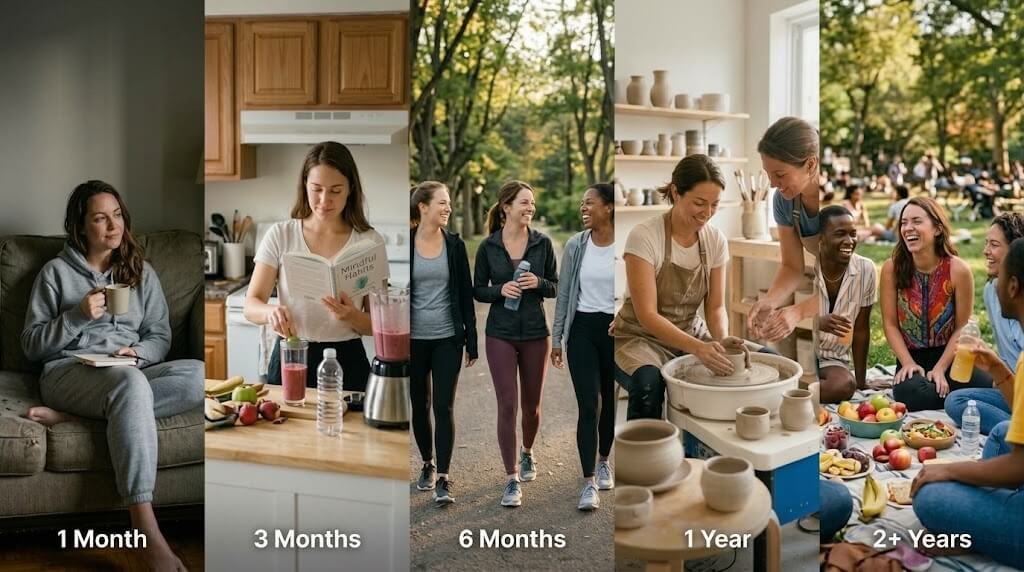
Living sober feels different at every stage. Everyone’s path varies, so treat these timelines as rough guides, not deadlines.
| Stage | What often shows up | What helps most |
| First week: | Poor sleep, anxiety, strong cravings | Medical guidance, food, water, rest, one trusted contact |
| First 30 days | Boredom, mood swings, trigger discovery | A daily routine, a plan for evenings, meetings or therapy |
| Months 2 and 3 | Surprise cravings, flat moods | Support group, exercise, honest check-ins |
| Months 6 to 12 | Overconfidence, anniversaries, first holidays | Ongoing support, new goals, a relapse-prevention plan |
| Year 2 and beyond | Identity shift, deeper emotions | Therapy, community, purpose |
The First Week: Get Through It Safely
The first week is the most physically demanding part of living sober. Sleep is often poor, anxiety is common, and cravings can feel constant. For heavy drinkers, withdrawal can be medically dangerous, so get medical guidance before you stop.
Keep the basics simple. Eat regular meals, drink water, and rest when you can. Tell one person what you are doing. Remove alcohol from your home. Plan your evenings, since cravings often hit then.
The First 30 Days: Learn Your Triggers
By week two or three, the physical fog often lifts. Then boredom and raw emotions arrive. Without alcohol to numb them, stress, loneliness, and anger feel louder.
Treat this month as a research project. Notice when cravings hit: after work, during arguments, on Friday nights. Jot down the time, place, and feeling. Patterns show up quickly, and patterns give you something to plan around. That is how living sober becomes manageable instead of overwhelming.
Months 2 and 3: Surprise Cravings
Many people expect cravings to fade in a straight line. They don’t. A sudden craving can hit weeks after you felt fine.
Some people also report lingering low mood, irritability, and poor sleep. Recovery communities often call this post-acute withdrawal. Tell your doctor or therapist if symptoms persist or worsen.
Sleep, energy, and focus often improve during this time. Notice those wins. They are real evidence that living sober is working. Source: PMC Review
Months 6 to 12: The Complacency Trap
Early excitement, sometimes called the pink cloud, usually fades by now. Life feels ordinary again. That is not failure. It is the moment to strengthen your routine, not drop it.
Holidays, birthdays, and your first anniversary can stir strong feelings. Plan for them early. Decide who you will be with, how long you will stay, and who you will call. Long-term living sober depends on plans like these.
Year Two and Beyond: Who Are You Now?
After the first year, living sober shifts from avoiding alcohol to building a life you do not want to escape. Many people describe an identity shift. They stop being the person who drank and become someone new.
Emotional sobriety becomes the main work. That means handling feelings without escaping them. Therapy, close friendships, and purpose-driven goals help more here than willpower does.
How to Live Sober in Everyday Situations
Most slips happen in ordinary moments, not dramatic ones. A plan for those moments is your best protection. Here is how to handle the most common situations while living sober.
What to Say When Someone Offers You a Drink
You owe nobody an explanation. Short answers work best because they leave little to debate. Pick one that sounds like you:
- “No thanks, I’m good.”
- “I’m not drinking tonight.”
- “I don’t drink anymore.”
- “I’ll have a sparkling water with lime.”
- “I feel better without it.”
Say it once, calmly, and change the subject. If someone keeps pushing, that tells you something about the friendship.
Work Events, Happy Hours, and Business Dinners
You can skip alcohol at work without making an announcement. Order club soda with lime, so your glass looks like everyone else’s. Arrive early, talk to the people you came to see, and leave when the conversation winds down.
If drinking dominates your team culture, suggest coffee meetings or lunches too. Living sober at work gets easier once colleagues see you are relaxed about it.
Weddings, Parties, and Holidays
Treat each event in your first year of living sober like a small project. Decide in advance how long you will stay and how you will leave. Bring your own drink, or arrive with a supportive friend. Drive yourself so you control your exit. Check in with someone before and after. In early sobriety, skipping a high-risk event is a valid choice.
Free Time and Boredom
Drinking fills many hours, and removing it leaves a hole. Fill that time on purpose. Schedule your old drinking hours with workouts, classes, volunteering, or projects. Start with small commitments you can keep. Momentum matters more than ambition when you are living sober.
Stress, Anger, and Loneliness
Living sober means feeling your feelings without a chemical shortcut. Build a short list of go-to responses. Try a walk, a call to a friend, a shower, slow breathing, or journaling. When a feeling hits hard, name it out loud first. Then pick something from your list. If feelings stay overwhelming, see a therapist.
Building a Sober Social Life
Social life is where living sober gets lonely or gets rich. Some friendships fade; others deepen. New ones often form faster than people expect.
Friendships Change
Some friends were mostly drinking buddies. You may see less of them, and that can hurt. Be honest with close friends about what living sober requires from them. Real friends adjust. Meanwhile, meet people through activities that skip alcohol. Try running clubs, classes, volunteering, faith communities, sober meetups, or online recovery groups.
Dating Without Alcohol
Dating sober feels awkward at first. Without a drink to settle your nerves, you notice everything. That is also an advantage, because you see people clearly.
Choose daytime or activity-based first dates, like coffee, a walk, or a museum. Many people mention early that they do not drink, which filters out poor matches. Intimacy without alcohol takes practice, so go slowly and communicate clearly. Dating while living sober is easier when you know your boundaries first.
Family Relationships
Living sober affects the whole family. Loved ones may feel relieved, wary, or both. Trust rebuilds through consistent behavior over time, not promises. Set boundaries around gatherings where alcohol flows heavily. Consider family therapy, or a group like Al-Anon for relatives.

Support Options for Staying Sober
No single method works for everyone, and many people combine several. This table gives a quick comparison.
| Option | What it is | Cost | Best for |
| AA and NA | Peer-led 12-step meetings, in person and online | Free | Community and a spiritual framework |
| SMART Recovery | Peer meetings using cognitive behavioral tools | Free | A science-based, self-directed approach |
| Therapy | One-on-one or group counseling | Varies | Anxiety, trauma, depression |
| Medication | Doctor-prescribed, FDA-approved drugs | Varies | Reducing cravings in alcohol use disorder |
| Sober living or outpatient care | Structured housing or treatment programs | Varies | People who need more structure |
12-Step Programs (AA and NA)
AA and NA offer free meetings that support living sober, in person and online. They emphasize peer support, sponsorship, and a spiritual framework. Many people find the community life-changing. Others find the style a poor fit. Try several meetings before judging, since every group has its own culture.
SMART Recovery and Other Alternatives
SMART Recovery is a secular option built on cognitive behavioral techniques. Women for Sobriety and LifeRing offer other peer-support models. Online meetings help if you live in a rural area or work odd hours. Plenty of people find that living sober works best when they mix two or three approaches.
Therapy and Counseling
Therapy helps with what drinking covered up: anxiety, trauma, grief, or depression. Cognitive behavioral therapy teaches you to spot and change the thoughts that lead to drinking. Look for a therapist with substance use experience. Many people find therapy makes living sober more stable over the long run.
Medications for Alcohol Use Disorder
Three medications are FDA-approved for alcohol use disorder: naltrexone, acamprosate, and disulfiram. They work differently, and a doctor decides whether any fits you. Even so, only a small share of people with the disorder receive them.
Ask your doctor or an addiction medicine specialist. Medication is not a shortcut or a moral failure. It is a medical tool for living sober. Source: NIAAA
Living Sober Without Alcohol Use Disorder
Not everyone who stops drinking has alcohol use disorder. Many people are sober curious. They notice that alcohol hurts their sleep, anxiety, or fitness, so they cut back or quit.
Living sober as a sober-curious person looks different. You may not need meetings or a recovery identity. Instead, you might try a 30-day reset, a drinking tracker, or friends who drink less. Whether you choose moderation or full abstinence is your call.
One caution: if you try to cut back and cannot, that is useful information. Talk to a doctor. The free Rethinking Drinking site from NIAAA offers a self-assessment.
The Benefits of Living Sober
The benefits of living sober arrive at different speeds. Some show up in days. Others take years.
- Sleep: Alcohol disrupts sleep quality, so many people sleep better once the early rough patch passes.
- Mood: Many people feel more emotionally steady after a few months without alcohol.
- Physical health: Stopping lowers your risk of liver disease, high blood pressure, and several cancers.
- Money: Someone spending $20 a day on alcohol saves about $7,300 a year. Track your own number.
- Time and relationships: No hangovers means more mornings, more patience, and more presence.
Source: CDC
What to Do If You Slip or Relapse
A slip does not erase your progress. Shame is often more dangerous than the drink itself, because it pushes people to keep drinking. If it happens, take these steps:
- Stop, remove the alcohol, and get somewhere safe.
- Tell someone you trust: a sponsor, therapist, or friend.
- Ask what triggered it, without blaming yourself.
- Adjust your plan with more support and fewer risky situations.
- Seek medical advice if you drank heavily, since stopping again can carry withdrawal risks.
If you used opioids or other drugs after a break, tolerance may have dropped, which raises overdose risk. Call a helpline or emergency services if you feel unsafe.
Many people who succeed at living sober long term had setbacks along the way. What matters most is what you do next.
How long does it take to feel normal after quitting drinking?
It varies. Acute withdrawal symptoms usually ease within days to a couple of weeks. Sleep, mood, and energy often keep improving for months. Tell your doctor if symptoms linger.
Is living sober hard?
The first few months are usually the hardest. Living sober tends to get easier as routines, relationships, and coping skills grow. It rarely becomes effortless, but it often becomes natural.
Can you have fun while living sober?
Yes. Fun feels different at first because alcohol is no longer lowering your inhibitions. Many people find they enjoy events more once they stop paying for them with next-day fog. Choose activities you actually like, not just substitutes for drinking.
What is the difference between sobriety and recovery?
Sobriety means not using substances. Recovery means a broader process of improving health, relationships, and purpose. You can be sober without a formal program, though many people pursue both.
How do I make friends when I don’t drink?
Join groups built around shared activities, such as running clubs, classes, volunteering, faith communities, or sober meetups. Repeated contact builds friendships faster than one-off events.
Can I live sober without AA?
Yes. AA helps many people, but SMART Recovery, therapy, medication, and peer communities also work. Choose what fits you.
When should I see a doctor?
See one before quitting if you drink heavily or daily. See one afterward if anxiety, insomnia, depression, or cravings do not ease.